
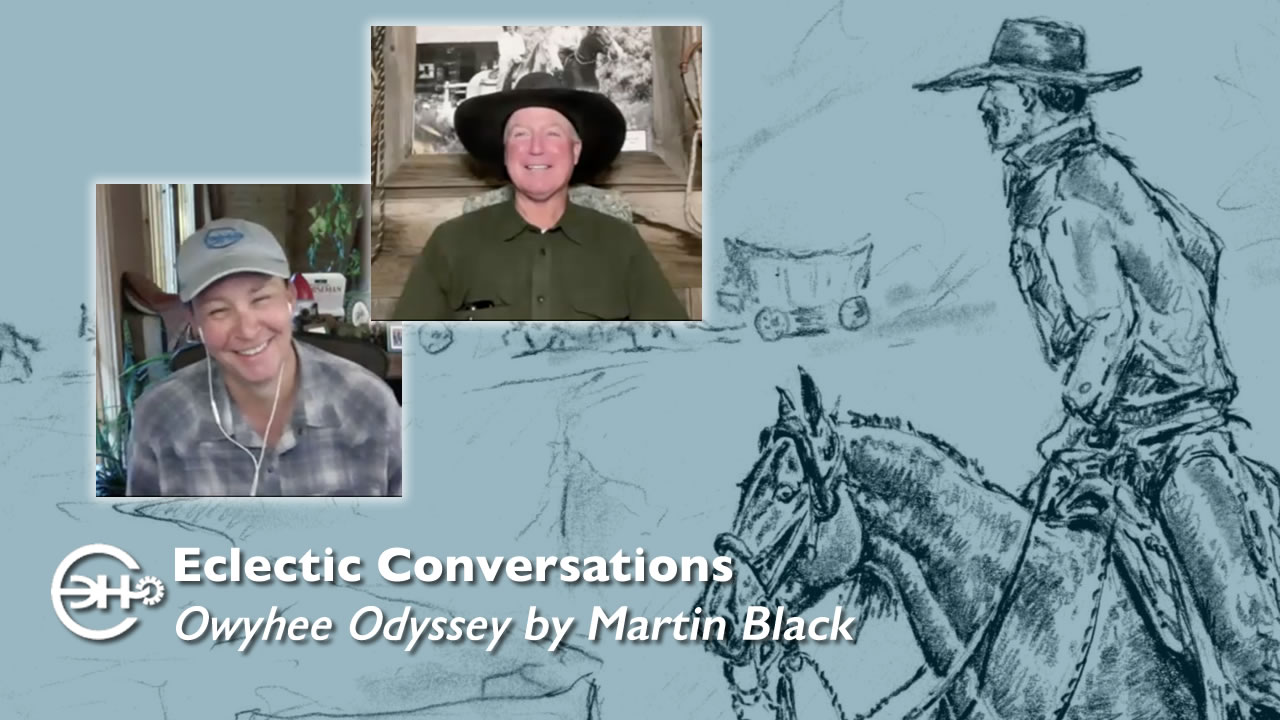
Martin Black discusses his new book, Owyhee Odyssey, a collection of stories rooted in his life and family history in the American West. Martin explains that the book originated from “bunkhouse stories”—tales told amongst cowboys and ranch hands—which he was encouraged to write down over 25 to 30 years ago for his children. The narrative scope is vast, tracing his family’s generational history back to ancestors who arrived in covered wagons before and after the Civil War. These stories illustrate a primitive and challenging way of life, highlighting the resilience of his forebears who often lived without basic modern comforts like indoor heat, a reality Martin himself experienced as a child.
** Order Now ** Only 100 signed and numbered limited edition hard covers available.
Martin delves into the historical context of his family’s settlement, noting that his great-great-grandfathers were among the earliest settlers in the region, initially supporting miners rather than mining themselves. The interview paints a picture of extreme isolation and self-sufficiency, exemplified by the story of his great-great-grandfather making a month-long, 400-mile round trip to Winnemucca, Nevada, once a year just to acquire necessary supplies from the nearest railroad. This historical section forms the foundation for understanding the “primitive” conditions that shaped his family’s character and experiences, connecting the early days of Idaho to his own upbringing.
The book transitions into Martin’s personal autobiography, covering his childhood and working life. He notes that compiling the book involved significant editing, as early drafts were deemed “too depressing” due to the constant hardships like deaths and wrecks. Martin’s perspective on these events, however, reflects a pragmatic cowboy mentality, where humor and laughter serve as essential coping mechanisms. This philosophy underscores the resilient spirit that is a central theme throughout the book’s diverse range of stories.
A significant feature of Owyhee Odyssey is its rich visual content, which includes a wealth of photos and artwork. Martin mentions collaborations with artists and friends, such as William Matthews and his nephew, illustrator John Schutte. Martin praises Schutte’s style, comparing it to Will James and Charlie Russell, emphasizing that the artwork’s authenticity comes from an understanding of the ranching lifestyle—knowing “which way the latigo hangs.” This commitment to authentic visual detail, alongside old family photos dating back to the 1800s, enhances the historical value and lived experience captured in the book.
Martin shares two anecdotes that capture the book’s tone: a lighthearted story where a friend shoots his hat on the ground after being challenged to shoot it in the air, and a more profound one about his Uncle Paul mentoring him on horsemanship. When Martin was distressed about “ruining a colt,” his uncle reassured him by saying, “Melvin Jones ruined a bunch of horses before he ever made a good one.” This advice—to learn from mistakes and continue forward—became Martin’s mission. The short, distinct chapters make the book easy to read, with stories that elicit both laughter and empathy, showcasing the resilience and acceptance of challenges that define the ranching life and Martin’s personal journey.